
No products in the cart.
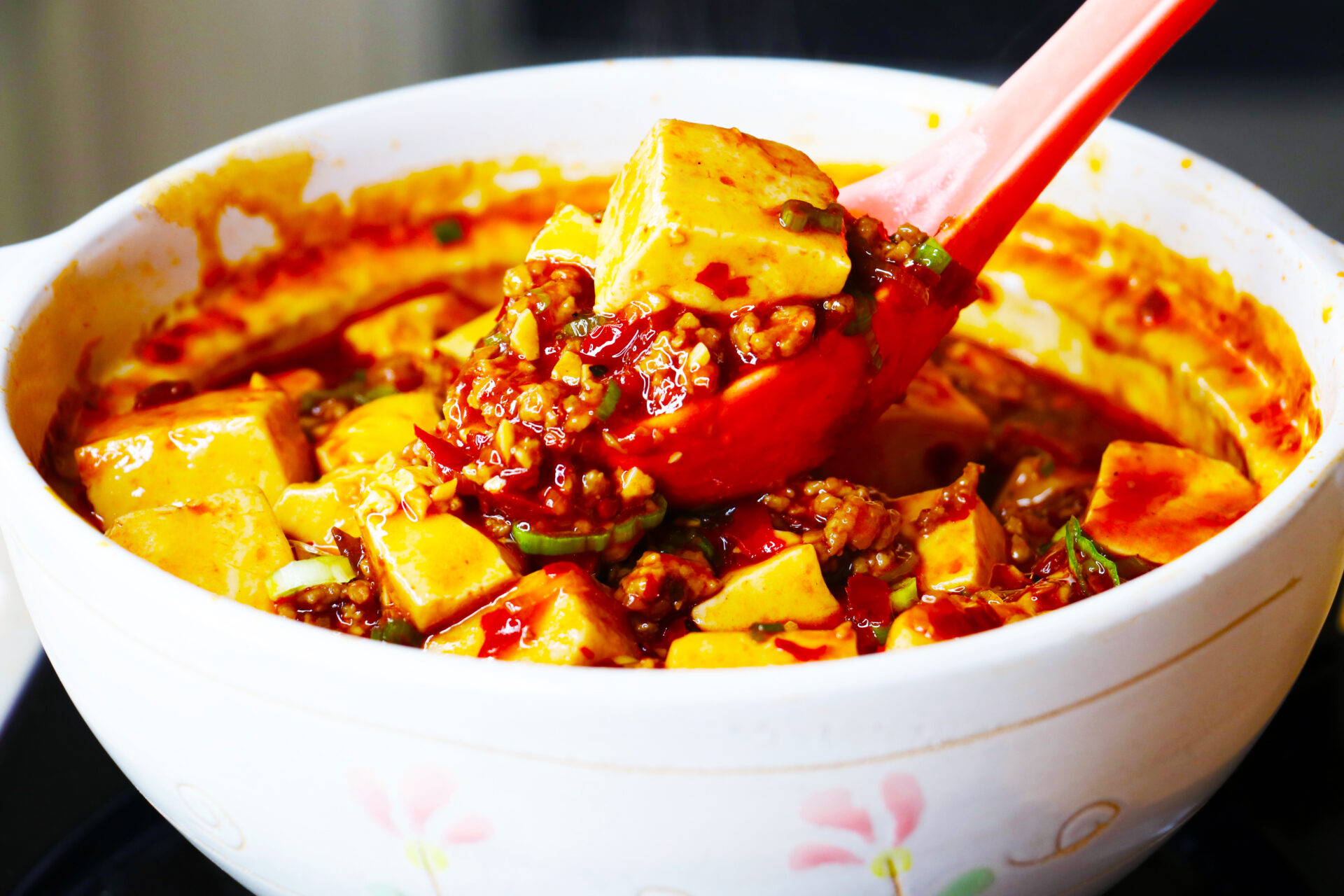
Mapo Tofu Recipe
Mapo Tofu is one of my favorite tofu dishes. Tofu on its own is very humble, but once it meets all these bold flavors—chili bean paste, garlic, and Sichuan peppercorns—it really becomes a superstar. Soft, silky tofu absorbs that rich, spicy sauce, giving you a dish that’s deeply savory with that signature numbing kick from Sichuan cuisine.
This dish also has a beautiful story behind it. According to legend, Mapo Tofu was created by an elderly woman during the Qing Dynasty who had pockmarks on her face. Locals affectionately called her “Mapo,” meaning “pockmarked grandma.” What started as a simple home-cooked dish has become one of the most iconic dishes in Chinese cooking.
This is something I love making when I want a comforting meal that’s still quick enough for a weeknight. It comes together in about 20 minutes, but the flavor tastes like it’s been simmering much longer.
If you’ve ever wanted to recreate that restaurant-style Mapo Tofu at home, this recipe will show you exactly how to build those flavors step by step.
What Is Mapo Tofu?
Mapo Tofu is a classic Sichuan dish made with tofu gently cooked in a rich, savory sauce built from chili bean paste, aromatics, and stock. It’s known for its bold flavor and its signature balance of spice and numbing sensation.
It’s a simple dish at its core, but the way the flavors come together is what makes it so memorable.
What Does “Mala” Taste Like?
“Mala” is the signature flavor of Sichuan cooking.
“Ma” is the numbing sensation from Sichuan peppercorns.
“La” is the heat from chili.
When you eat it, the spice builds first, then you get that light tingling feeling on your tongue. It’s not just heat—it actually makes the dish feel more complex and layered.
How to Keep Tofu from Breaking?
Soft tofu is delicate, but a few small steps make it much easier to handle.
A quick boil in salted water helps it firm up slightly. When adding it to the pan, gently slide it into the sauce instead of dropping or stirring too aggressively.
Once it’s in, let it simmer and absorb the sauce. Try to move the pan more than the tofu itself—this keeps the pieces intact while still coating them evenly.
How to Adjust the Spice?
This dish is known for its bold flavor, but you can easily adjust it to your taste.
For a milder version, use less chili bean paste and reduce the Sichuan peppercorn. You’ll still get a rich, savory dish, just with a softer heat.
At home, I sometimes make it a little lighter depending on who I’m cooking for—it’s still full of flavor, just more balanced.
Can You Make Mapo Tofu Without Pork?
Yes, you can.
Ground pork adds richness, but it’s not essential. You can leave it out or replace it with finely chopped mushrooms for a similar texture.
The sauce is already very flavorful, so the dish still feels complete and satisfying.
Let’s Talk Ingredients
Tofu
Soft or silken tofu is the traditional choice for Mapo Tofu. It’s smooth, delicate, and absorbs the sauce beautifully, giving you that signature silky texture.
Ground pork
Adds richness and a savory depth to the dish. As it cooks, the fat renders into the oil, building another layer of flavor in the sauce.
Pixian doubanjiang
This is the foundation of the dish. It brings a deep, fermented, savory flavor along with that signature red color.
Sichuan peppercorns
Used to infuse the oil, they add that gentle numbing sensation that makes the dish so unique.
Ginger, garlic, and scallions
These aromatics build the base flavor. They bring warmth, fragrance, and balance to the sauce.
Soy sauce and seasonings
Soy sauce adds saltiness and umami, while white pepper and a touch of sugar help round out the flavor.
Chicken stock
This brings everything together and creates the base of the sauce, making it rich but still light enough to coat the tofu.
Cornstarch slurry
Helps thicken the sauce so it clings to the tofu without being too heavy.
Cooking oil
Use a neutral, high-smoking-point cooking oil. This is important for properly blooming the chili bean paste and aromatics.
Step-by-Step: Let’s Cook
Serves: 2
Prep time: 10 minutes
Cook time: 10 minutes
Step 1: Prepare the tofu
In a pot, bring water to a boil with a pinch of salt. Gently lower the tofu into the water and cook for about 1 minute, then remove and set aside.
Tip: This helps the tofu firm up slightly so it’s easier to handle.
Step 2: Mix the seasoning
In a bowl, combine the soy sauce, Sichuan peppercorn powder, salt, white pepper, and sugar, then mix well.
Tip: Mixing ahead keeps everything smooth once you start cooking.
Step 3: Infuse the oil
In a pan over low heat, add the cooking oil and Sichuan peppercorns, and cook until fragrant. Remove and discard the peppercorns.
Tip: This step builds a subtle numbing aroma into the oil.
Step 4: Cook the pork
Increase the heat to high, add the ground pork, and stir-fry until lightly browned.
Tip: Browning the pork adds depth and richness to the dish.
Step 5: Build the base
In the same pan over high heat, add the Pixian broad bean paste and stir-fry until the oil turns red and fragrant.
Tip: This is where the color and core flavor of the dish develop.
Step 6: Add aromatics
Add the ginger, garlic, and white scallions, then stir-fry briefly until fragrant.
Tip: Keep this step quick so the aromatics stay bright and not burnt.
Step 7: Simmer with tofu
Pour in the seasoning mixture and chicken stock and bring to a simmer. Gently slide in the tofu and return the pork. Let cook for about 3 minutes.
Tip: Let the tofu sit in the sauce so it absorbs flavor without breaking.
Step 8: Thicken and finish
Stir the cornstarch slurry, then pour it into the pan and gently mix until the sauce thickens. Sprinkle with green scallions and serve immediately.
Tip: Add the slurry at the end so the sauce coats everything evenly without becoming too heavy.
Mapo Tofu Recipe
Authentic Sichuan Mapo Tofu is a bold, spicy, and numbing dish with silky tofu in a rich, savory sauce.
Ingredients
For the tofu
- 1 block silken tofu, cut into cubes
- Pinch of salt
For the sauce
- 1 tablespoon soy sauce
- 1/2 teaspoon Sichuan peppercorn powder
- Pinch of salt
- Pinch of white pepper
- Pinch of sugar
For the stir-fry
- 2 tablespoons cooking oil
- 1 tablespoon Sichuan peppercorns
- 6 ounces ground pork
- 2 tablespoons Sichuan Pixian broad bean paste
- 1 teaspoon ginger, minced
- 5 cloves garlic, minced
- 3 stalks scallions, minced, white and green parts separated
- 1 cup chicken stock
- 2 teaspoons cornstarch, for slurry
- 2 tablespoons water, for slurry
Instructions
- To prepare the tofu, in a pot, bring water to a boil and add a pinch of salt, then gently lower the tofu into the water and cook for 1 minute. Remove the tofu and set it aside.
- To make the sauce, in a bowl, combine the soy sauce, Sichuan peppercorn powder, salt, white pepper, and sugar, then mix well.
- To infuse the oil, in a pan over low heat, add the cooking oil and Sichuan peppercorns, and cook until fragrant. Then remove and discard the peppercorns.
- To cook the pork, increase the heat to high, add the ground pork, and stir-fry until lightly browned. Remove and set aside.
- To build the base, in the same pan over high heat, add the Pixian broad bean paste and stir-fry until the oil turns red and fragrant, then add the ginger, garlic, and white scallions and stir-fry briefly.
- To braise, pour in the sauce and chicken stock and bring to a simmer, then gently slide in the tofu and return the pork. Let it cook for about 3 minutes.
- To thicken, in a small bowl, mix the cornstarch with the water to form a slurry, stir again, then pour into the pan and gently mix until the sauce thickens.
- To serve, garnish with the green scallions and serve immediately.
Video
Notes
• Boil the tofu with salt: A quick boil in salted water helps the tofu firm up slightly, making it easier to handle without breaking.
• Handle the tofu gently: When adding the tofu to the pan, slide it in and avoid aggressive stirring so the pieces stay intact.
• Infuse the oil: Cooking the Sichuan peppercorns in oil first builds a subtle numbing aroma throughout the dish without biting into whole peppercorns.
• Keep aromatics brief: Ginger, garlic, and scallions cook quickly—just a short stir-fry keeps them fragrant and not burnt.
• Let the tofu simmer: Give the tofu a moment in the sauce so it absorbs flavor without needing to be stirred much.
• Stir the slurry before adding: Cornstarch settles quickly, so mix it again right before pouring to ensure even thickening.
• Adjust the spice: Reduce the doubanjiang or Sichuan peppercorn for a milder version, or add more for a stronger mala flavor.
• Protein swap: You can skip the pork or replace it with finely chopped mushrooms for a vegetarian version.